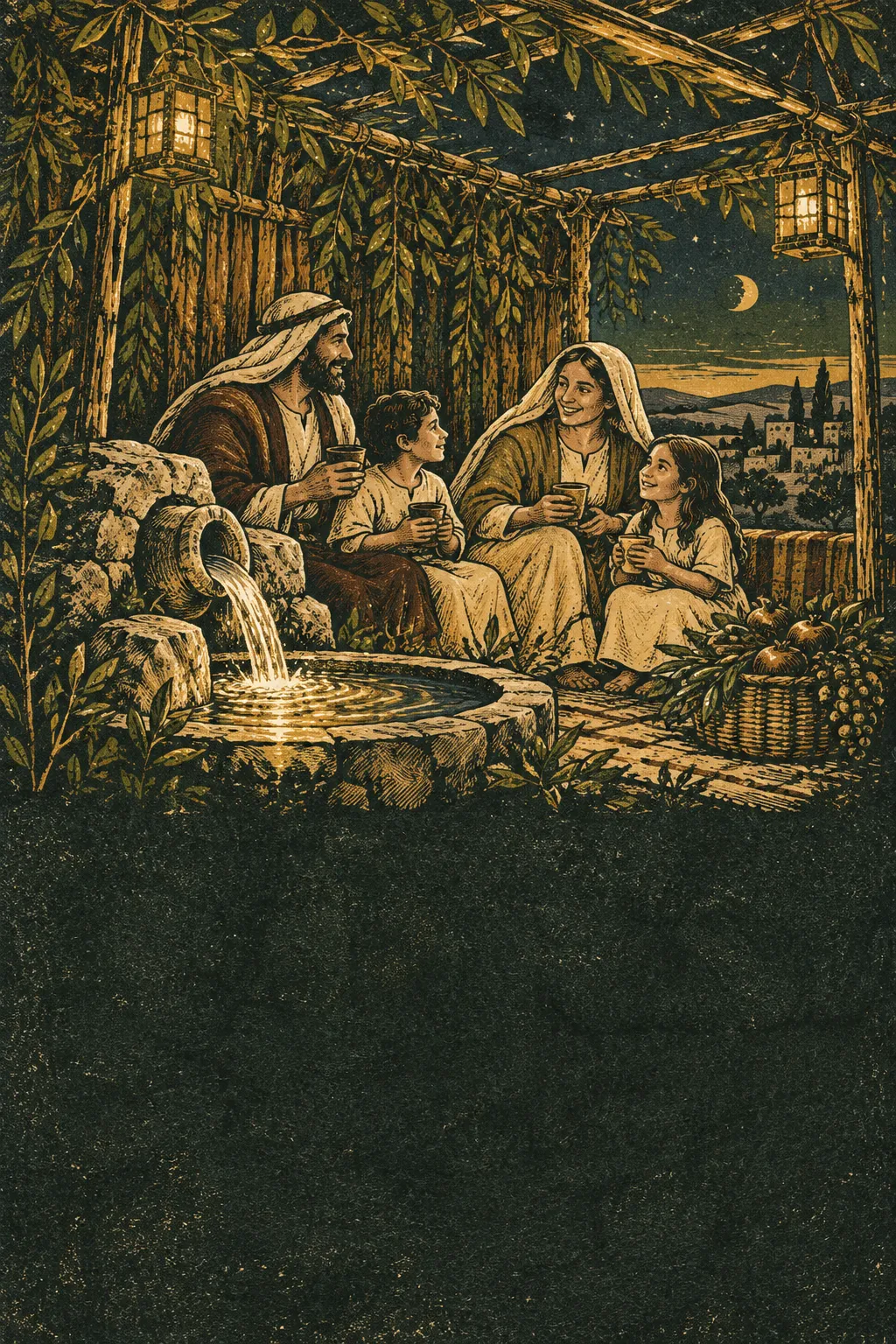
Joy, gladness — the rejoicing the Torah commands at its feasts, above all at Sukkot
also written: simcha, симха, симха́
In Scripture
World English Bible
You shall rejoice in your feast, you, your son, your daughter, your male servant, your female servant, the Levite, the foreigner, the fatherless, and the widow, who are within your gates.
Deuteronomy 16:14The verb of the same root: joy at the feast is commanded, and the guest list includes the Levite, the foreigner, the fatherless and the widow.
All the assembly of those who had come again out of the captivity made booths, and lived in the booths; for since the days of Jeshua the son of Nun to that day the children of Israel had not done so. There was very great gladness.
Nehemiah 8:17Sukkot kept again after the exile; the account closes with the noun simchah: very great gladness.
The same lexicon, opened in IsraelForYou: pick a word from the list and its card opens — script, sound, and every verse it lives in.
9:41
Hebrew words
סכותsukkot
Booths — the Feast of Tabernacles and the…
הושיעה נאhosanna
Please save! — the plea of Psalm 118 that…
שמחהsimchah
Joy, gladness — the rejoicing the Torah…
ישועהyeshuah
Salvation or deliverance — a noun related to,…
ישועyeshua
Hebrew name of Jesus — a short form of…
‹ Hebrew words
שִׂמְחָהsimchahsim-KHAH
Joy, gladness — the rejoicing the Torah commands at its feasts, above all at Sukkot
You shall rejoice in your feast, you, your son, your daughter, your male servant, your female servant, the Levite, the foreigner, the fatherless, and the widow, who are within your gates.
Deuteronomy 16:14
All the assembly of those who had come again out of the captivity made booths, and lived in the booths; for since the days of Jeshua the son of Nun to that day the children of Israel had not done so. There was very great gladness.