IsraelForYou
EN
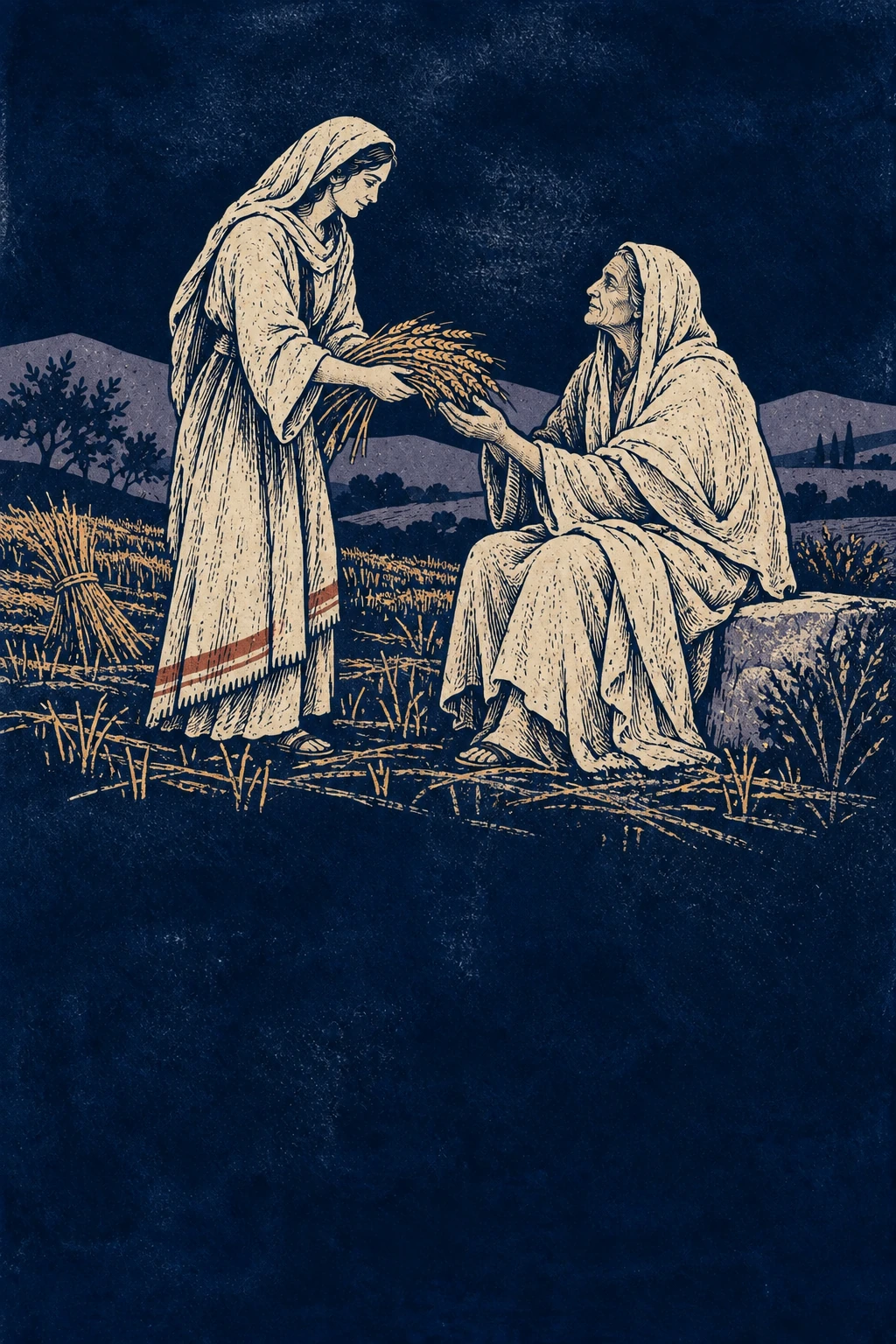
Ruth offering barley to Naomi, illustrated in ivory and ochre on an indigo background in a woodcut style

Ahava and Hesed: Love in the Book of Ruth

A widow's promise, a place at the table, and the family story that leads to Jesus

Hebrew & Bible

Full guide: 6 min · 6 chapters · 4 Hebrew words

Naomi has buried her husband and both her sons. Now she is leaving Moab for Bethlehem, the town she left during a famine. Her daughters-in-law walk with her. All three women are widows, and Naomi can see little reason for the younger women to share her uncertain future (Ruth 1:1-7).

The Hebrew word ahava means love. Another word, hesed, often describes kindness expressed through loyalty to someone. The book of Ruth gives these words a setting we can recognize: a family in grief, with decisions to make about tomorrow. Following the women home helps us understand what such love asks of a person, and how God works through it.

The chapters

  1. Ahava and Hesed: Love in the Book of Ruth
  2. A Blessing Before the Goodbye
  3. What Comes Home from the Field
  4. The Woman Who Loves You
  5. Finding the Word in Your Bible
  6. From Bethlehem to Jesus

Hebrew in this guide

Scripture it opens

Ruth 1:1-7 Ruth 1:8 Ruth 1:16 Ruth 1:14-17 Ruth 1:20-21 Ruth 2:8-18 Ruth 2:12 Ruth 2:23 Ruth 3:9-10 Ruth 3:9-13 Ruth 4:1-10 Ruth 4:13-17 Ruth 4:15 Jeremiah 31:3 Psalm 23:6 Psalm 136:1 Exodus 34:6 Ruth 4:17-22 Matthew 1:1-5 Mark 10:45 Romans 5:8 Romans 8:34 1 John 4:19
How it reads in the app

The same guide, opened in IsraelForYou: tap any Hebrew word and its meaning rises from below, with the verses it lives in.

Ruth offering barley to Naomi, illustrated in ivory and ochre on an indigo background in a woodcut style Ahava and Hesed: Love in the Book of Ruth

Naomi has buried her husband and both her sons. Now she is leaving Moab for Bethlehem, the town she left during a famine. Her daughters-in-law walk with her. All three women are widows, and Naomi can see little reason for the younger women to share her uncertain future (Ruth 1:1-7).

The Hebrew word ahava means love. Another word, hesed, often describes kindness expressed through loyalty to someone. The book of Ruth gives these words a setting we can recognize: a family in grief, with decisions to make about tomorrow. Following the women home helps us understand what such love asks of a person, and how God works through it.

Continue in IsraelForYou

IsraelForYou is on the App Store, free to download. A Google Play edition is planned and will be linked here when it ships.

Download on theApp Store PlannedGoogle Play